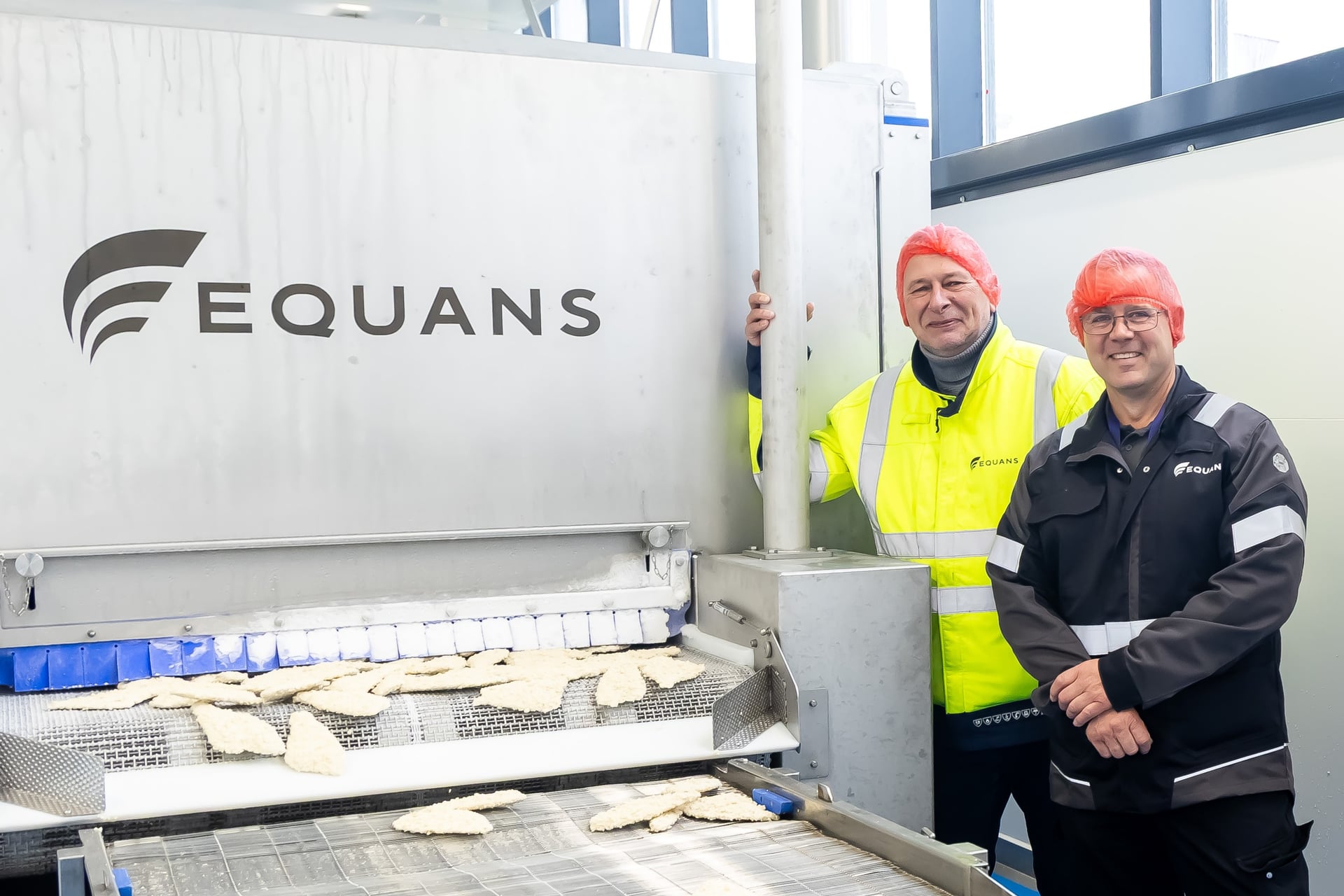
The DI freezers are replacing two ageing conveyor freezers which, after 34 years of loyal service, were due for replacement and no longer met current hygiene and efficiency standards. “When you’re replacing equipment, you want the very latest technology straight away”, says Ten Napel. “Being able to clean them thoroughly was important, as hygiene requirements in the food industry have become considerably stricter in recent years.”
As Equans had previously supplied an injection air freezer and line freezers to the Urk-based fish processor, the decision to collaborate again was quickly made. The brief was clear: to develop a flexible, modern freezing system that is easy to clean. The biggest challenge was the planning. “We wanted to limit downtime to a maximum of one month”, says Ten Napel. According to him, the transition went smoothly and according to plan, with good coordination between all parties involved.

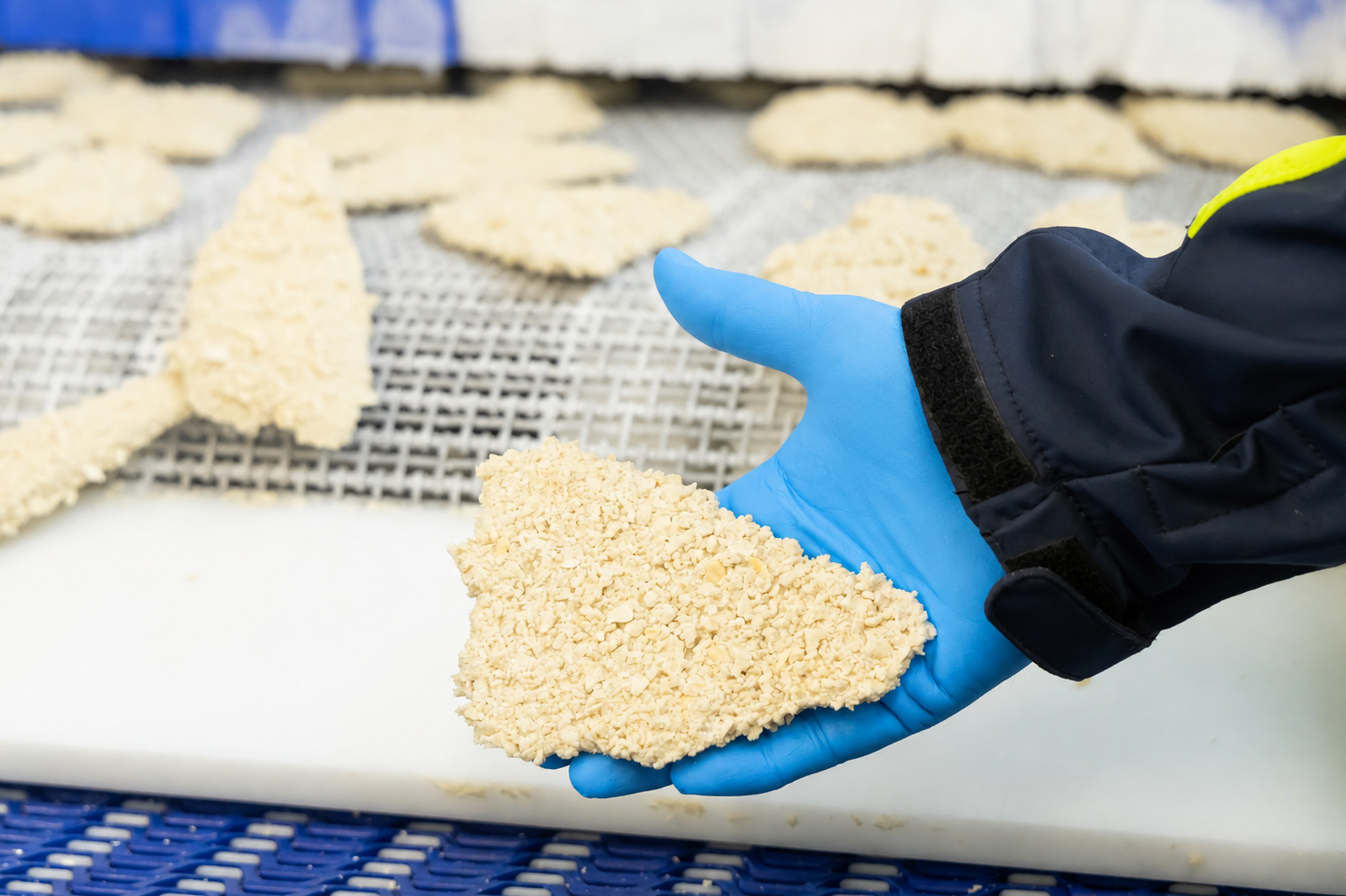
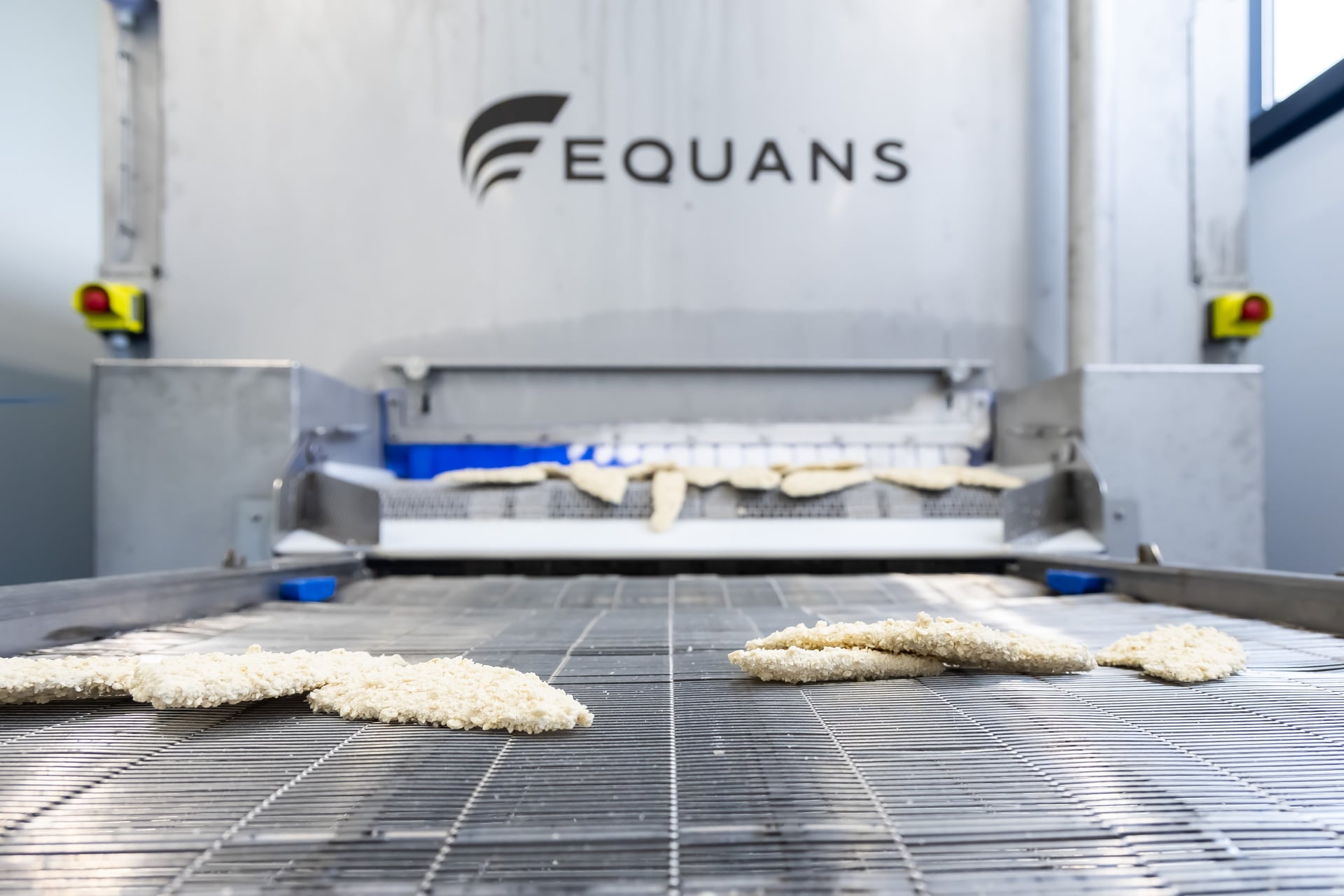
Equans’ engineers designed two compact ammonia (NH₃) DI freezers based on IQF technology: Individual Quick Frozen. This involves freezing products individually and rapidly on a conveyor belt. As well as stuffed fish products, Kramers’ Seafood mainly uses the freezers for breaded fish products, such as plaice fillets. Prior to the freezing process, the fish is first coated in a layer of batter, followed by a layer of breadcrumbs. The first freezer ensures that this so-called breading layer is immediately frozen solid, so that the coating stays firmly attached to the fish.
“The first freezer runs at exactly the same speed as the breading line, two metres per minute. Otherwise, the breadcrumb coating would be scraped off at the bottom”, explains Ten Napel. After one minute in the first freezer, the fish is frozen through to -18 degrees in six minutes in the second freezer. As the breadcrumb coating is already hard by then, the products can be stacked there. This creates an efficient and compact setup. “An alternative is a large spiral or gyro freezer, but that requires much more space and a more complex installation. With this solution, we maintain the same capacity whilst using much less floor space.”
Uniform airflows speed up the freezing process
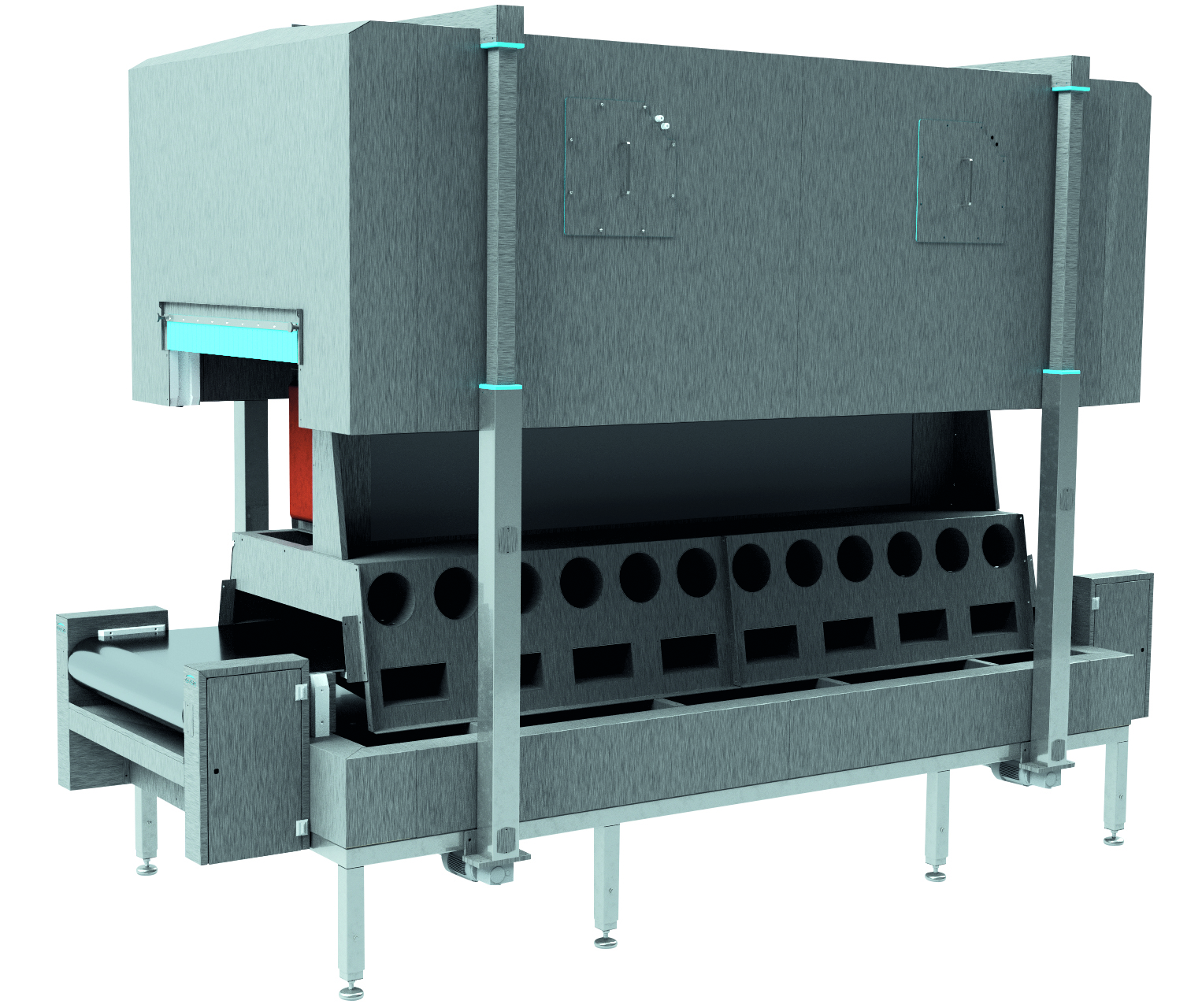
The strength of the DI freezers lies primarily in the way cold air is directed over the product. Whereas the old tunnel freezers blew air from just one side, the new freezers blow air along the entire length of the freezer, from both above and below, as well as at the head and tail ends. As a result, the product cools more evenly throughout. “With the old freezers, the fish on one side was always less firm than the fish on the other side”, explains Ten Napel. “Now the fish is equally firm all round.”
The freezing process is about three times faster than before. For fish products, this freezing speed is crucial. The faster a product freezes, the less moisture escapes. This has a direct impact on weight, texture and flavour. Ten Napel: “When frozen slowly, fish loses moisture to the dry freezing air. That process only stops once the outside of the product is completely frozen. The faster that happens, the juicier and more flavourful the fish remains.” According to him, the difference can amount to a reduction in weight loss of between 1 and 1.5 per cent. “On an annual basis, that represents a huge saving.”


A more compact freezing line, greater capacity
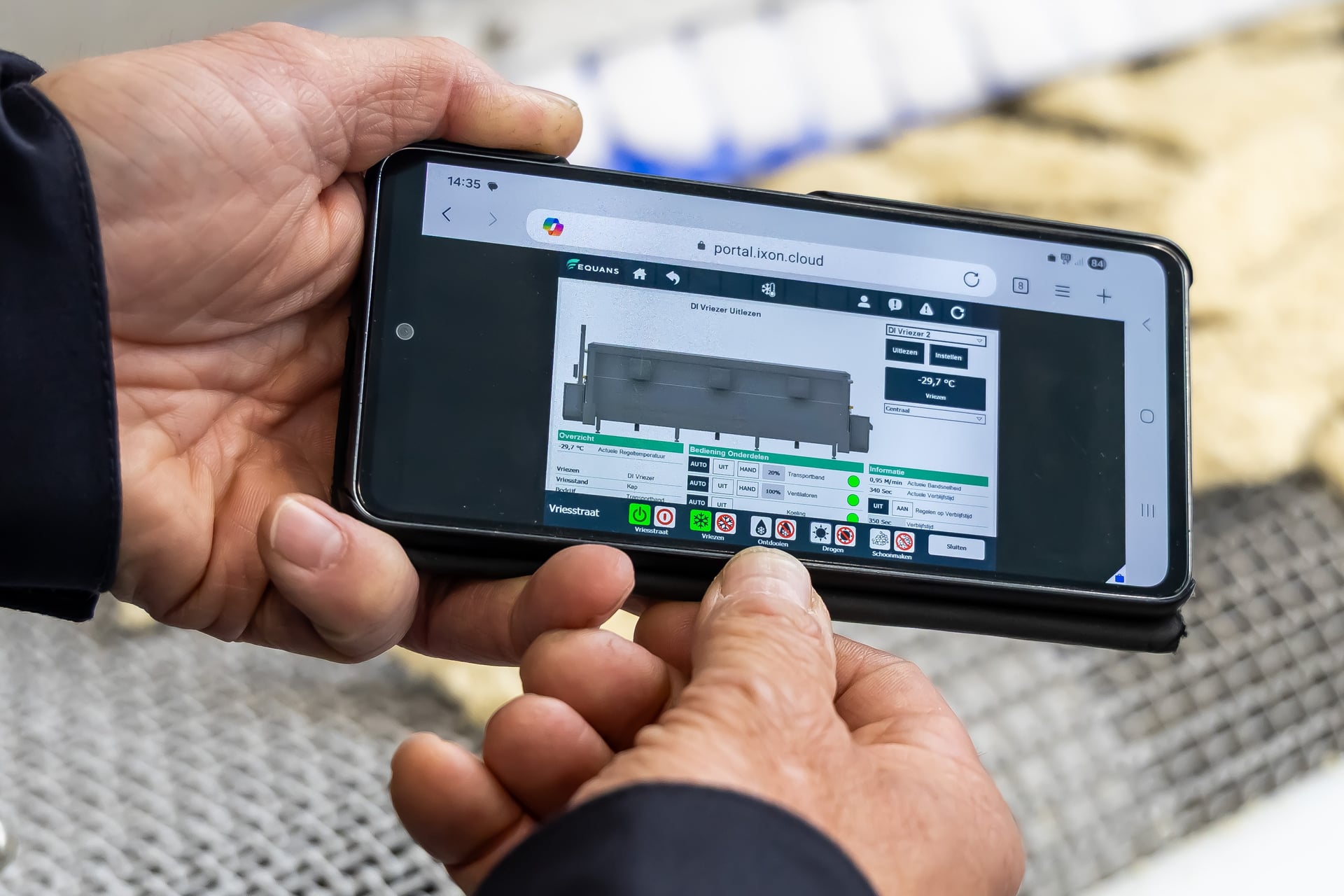
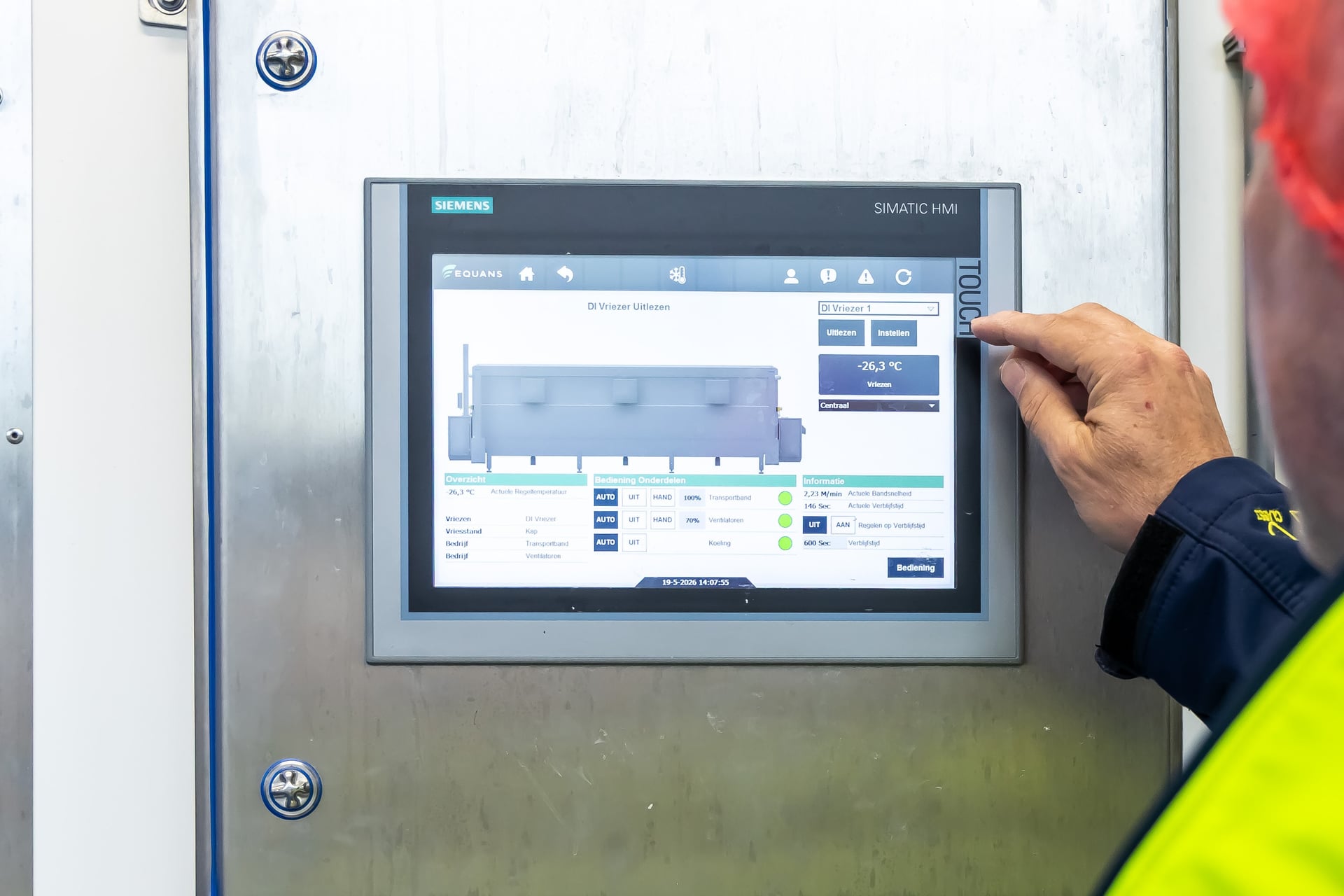
Whereas the old freezing line was 36 metres long, the DI freezers together now require just 14 metres. “Yet we now have two to three times as much freezing capacity per metre”, explains Ten Napel. Settings such as belt speed and fan power can be saved for each product and easily adjusted to the product’s requirements at the touch of a button. This allows the company to switch quickly between different fish species and product sizes, without long changeover times. The freezers now run smoothly for two full shifts in a row before defrosting and cleaning are required.
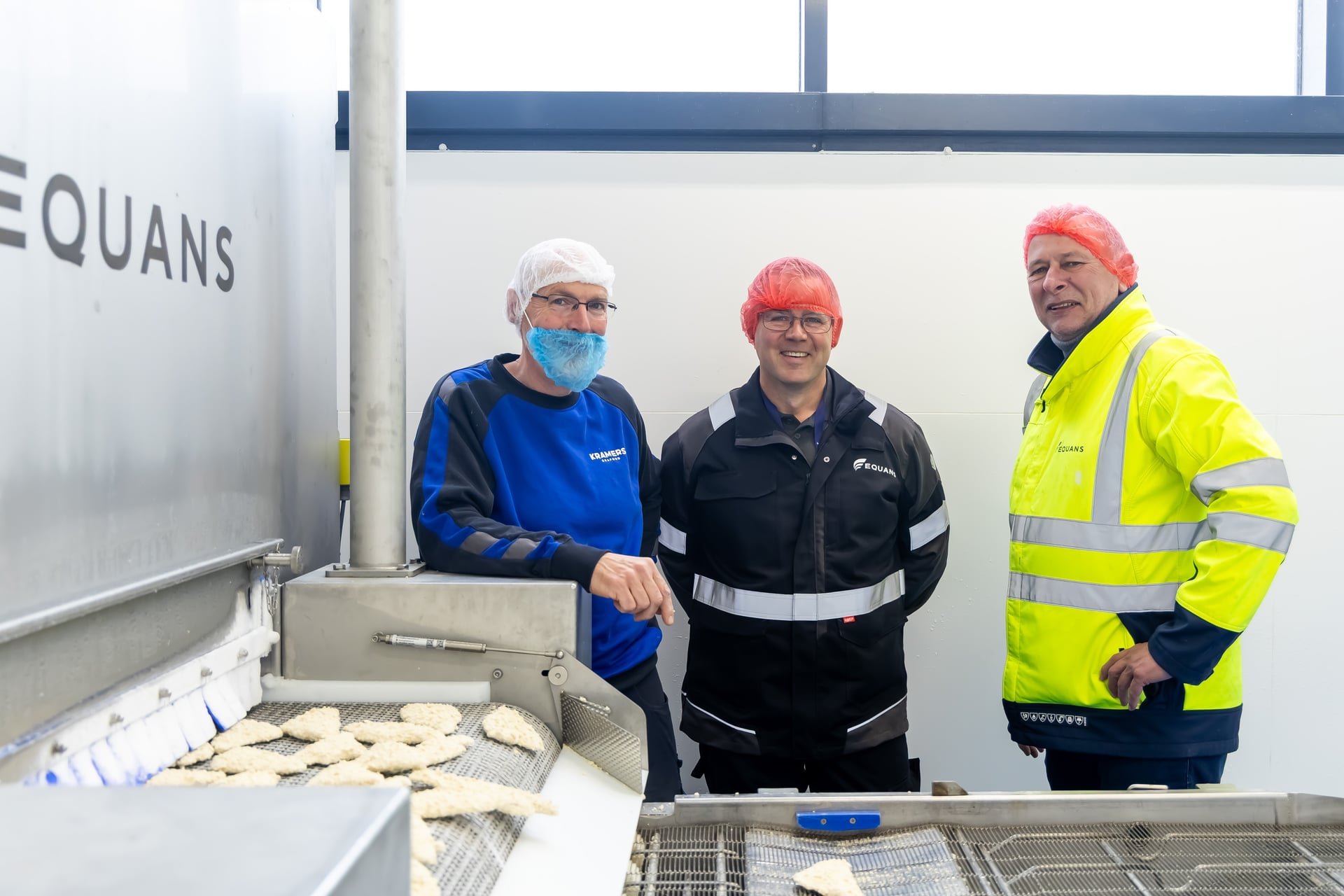


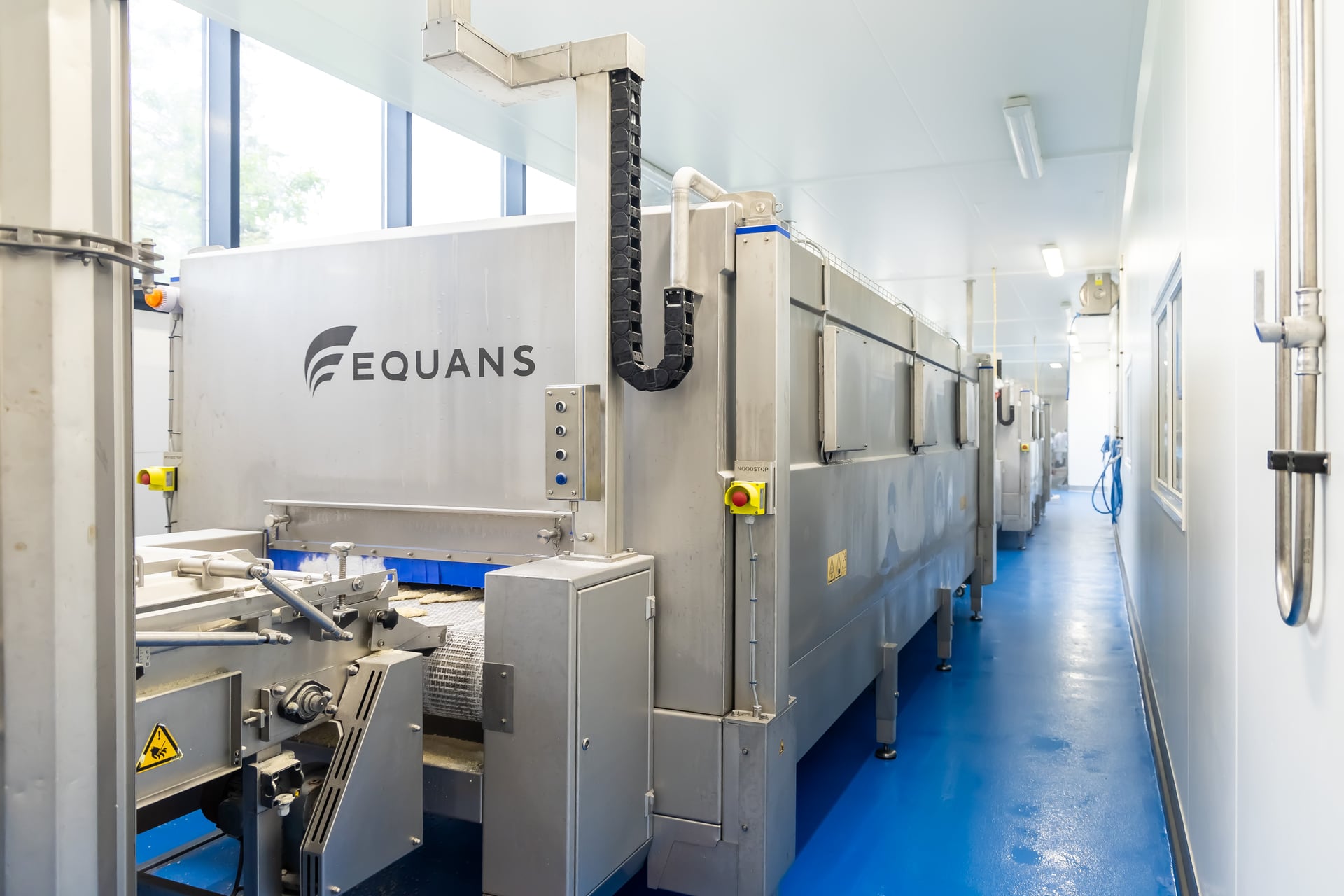
The compact Double Impact freezers from Kramers’ Seafood are connected in series and therefore require little floor space. As well as performance, hygiene played a key role in the design of the freezers. That is why they are made of stainless steel and feature sloping surfaces, so that dirt is less likely to accumulate. Inside and on the freezers, the various parts are fully welded together, meaning there are no sealant joints. It was precisely these that required a considerable amount of maintenance on the old freezers. “The biggest advantage is that the freezer lid can be raised electrically,” explains Ten Napel. “This gives us a clear view of dirt everywhere and makes cleaning the unit much easier.”
Effective cleaning is particularly important for breaded products, as some breadcrumbs always end up in the freezer. “Now that we can precisely adjust the airflow for each product using variable fan speed, as little breadcrumb coating as possible is lost and less of it sticks to the freezers.” The shorter length of the freezers also pays off when it comes to cleaning. “It’s simply much quicker.”
Extra filters prevent contamination
Ten Napel describes the collaboration with Equans as pleasant and efficient. A few teething problems arose when the freezers were commissioned, but he says these were quickly resolved. The technical project manager is not surprised that such challenges arise: “The new installations were connected to an existing cooling system with pipework that was 16 years old. You know then that there’s a risk of contamination from the old system”, he says. “Equans responded immediately and fitted extra filters in the cooling pipes to resolve the problem.”
DI freezers are well suited to modern fish processing
According to Ten Napel, DI freezers are well suited to the requirements of modern fish processing. “They combine high freezing performance with a compact and hygienic design. For us, this is an efficient compromise between capacity, space requirements and investment costs. An injection air freezer offers comparable performance, but requires more space and a higher investment. With these DI freezers, we have found a compact, high-quality solution.”

Want to secure your business operations? Take advantage of the opportunities of phasing out synthetic refrigerants.
Request free brochure