


In many production environments, heat and cold are generated separately. This leads to inefficiencies and energy wastage, says Erik. ‘By making smart use of energy flows and linking them together, you can drastically reduce your energy consumption. For example, you can use residual heat from cooling processes for other production processes, heating systems or drying applications.’
One of the most effective ways to reduce gas consumption is to utilise residual heat with industrial heat pumps. These systems can upgrade low-grade residual heat to temperatures suitable for production processes, heating or hot water supply. This directly lowers energy costs and reduces your reliance on fossil fuels.
For example, heat pumps can reuse heat from refrigeration systems to heat water or air in other parts of the factory. Erik: ‘A system that utilises and upgrades residual heat delivers immediate cost savings. Our client, Zwanenberg Food Group, felt the financial benefits of commissioning a heat pump straight away. They achieved energy savings of no less than 95 per cent.’
There are also opportunities to save money by moving away from gas-fired systems. Erik: ‘Steam is a widely used heat transfer medium. That heat is often generated by gas-fired systems operating at high temperatures, whilst the consumers (the processes) in many cases require lower temperatures. As a result, running costs are unnecessarily high, as are the enormous quantities of fossil fuels that are burnt.’
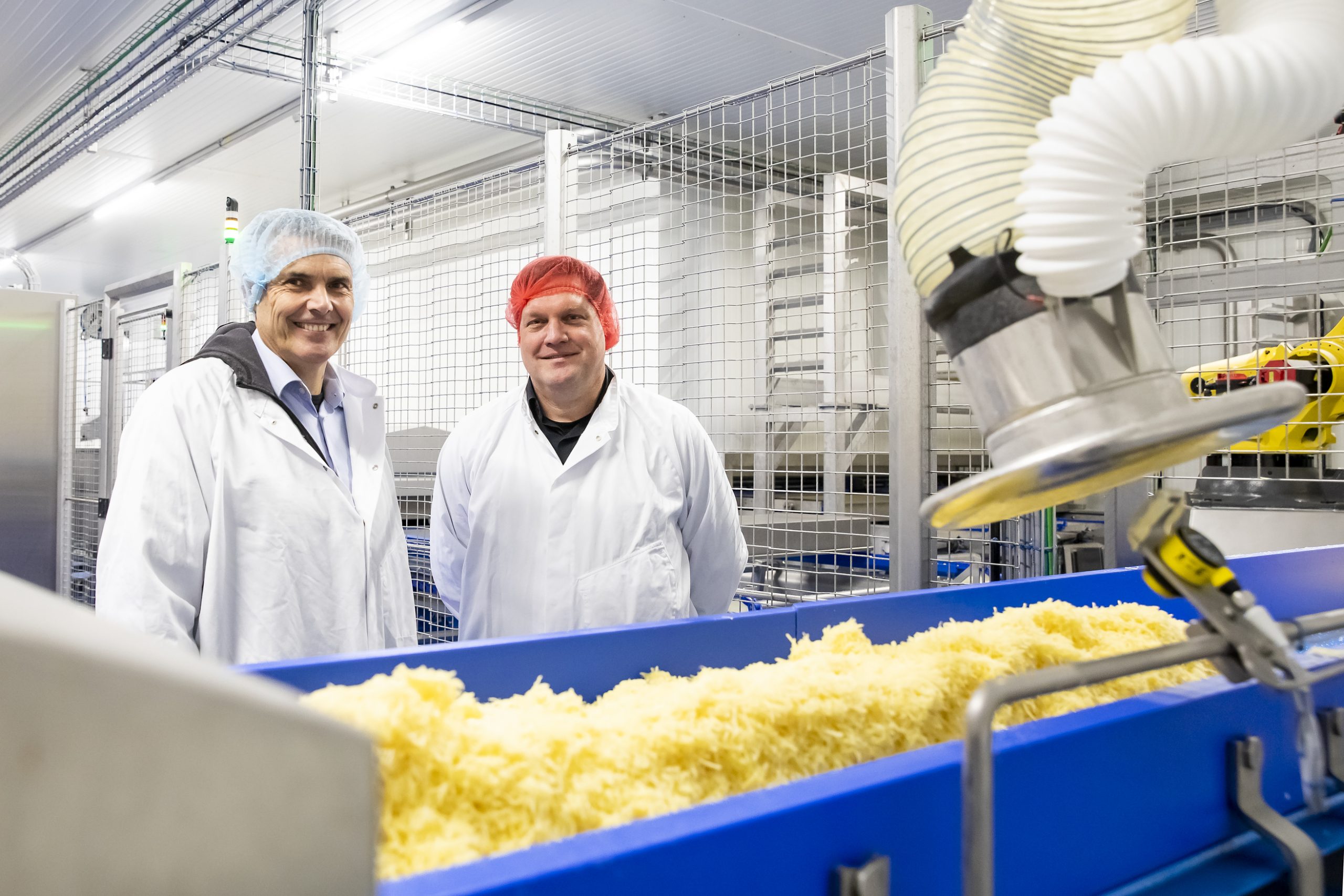
Moreover, gas prices are highly volatile and sensitive to geopolitical events. As a result, unexpected price fluctuations can occur more frequently. ‘On top of that, the Dutch government is set to turn off the gas tap from 2025 onwards. As you will no longer be able to use a gas-fired system for heating, it is much smarter and cheaper to phase it out as quickly as possible. One of our clients, Grozette in Woerden, replaced its gas-fired system with an electric drying tunnel featuring an integrated cooling and heating system. This enables the company to dry cheese products without using gas. It’s both cost-effective and sustainable.’
Synthetic refrigerants, such as HFC’s (hydrofluorocarbons), have a high Global Warming Potential (GWP) and are increasingly subject to regulatory restrictions. The EU’s stricter F-gas Regulation is a good example of this. A lower quota for F-gases has led to a refrigerant shortage, resulting in a market mechanism where scarcity drives up prices. This can be particularly problematic for servicing and maintenance, as refilling (refrigerants) becomes too expensive or even impossible.
The solution lies in switching to natural refrigerants, such as CO₂, ammonia or hydrocarbons. This not only offers a more sustainable solution but also reduces operational costs in the long term. Erik: ‘We therefore strongly advise food processors and producers to urgently explore possible alternative refrigerants, so that their business continuity is not jeopardised. The European Commission is set to consider a proposal this year to ban PFAS, which are used in synthetic refrigerants. The impact on your business could be significant if the PFAS ban is actually implemented.’

Want to secure your business operations? Take advantage of the opportunities of phasing out synthetic refrigerants.
Request a free brochure
As a food processor, you can gain a great deal from optimising your processes. However, this does require a critical eye. Are your production lines and equipment precisely coordinated? Can you adjust certain production methods or the routing? Integrated control systems can also make a difference in terms of costs. By fully aligning the software of refrigeration and freezing systems with other systems and production processes, or – indeed – with the specific requirements of the product, you will benefit from improved product quality and lower energy costs.
‘Equally important is the use of smart technology to detect faults at an early stage,’ says Erik. ‘With our data-driven maintenance tools, for example, we can monitor all refrigeration systems on a production line 24/7. Anomalies and faults that are not visible to technicians with the naked eye are nevertheless identified through data analysis. This enables us to take action before breakdowns occur, thereby minimising downtime.’
By investing in modern refrigeration and heating technology, you not only reduce your carbon footprint, but also make your production process much more efficient and cost-effective. ‘The phasing out of synthetic refrigerants and gas-fired systems, the integration and upgrading of existing energy flows, and process optimisation are crucial steps towards a future-proof and competitive production environment. Companies that embrace new technologies will find that, despite the investment, modern and energy-efficient systems result in a better Total Cost of Ownership (TCO)’, Erik says.


